
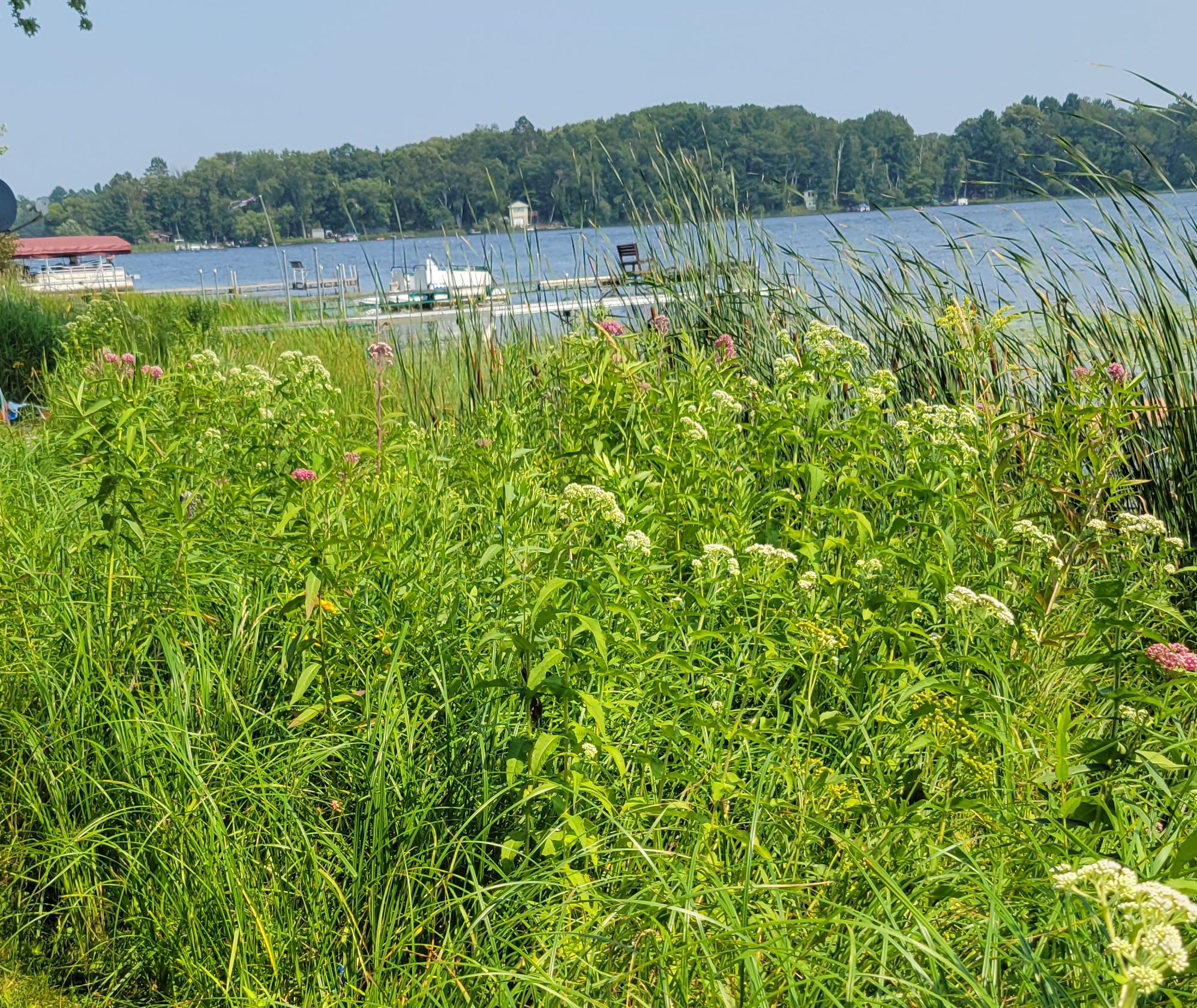
Environmental landscapes with a focus on shoreline restoration
Serving the Brainerd Lakes and Sorrounding Areas
Services

On-site consultations

Installation workshops

Design and planning

Follow-up visits
Benefits of natural shorelines and native vegetation
Biodiversity conservation
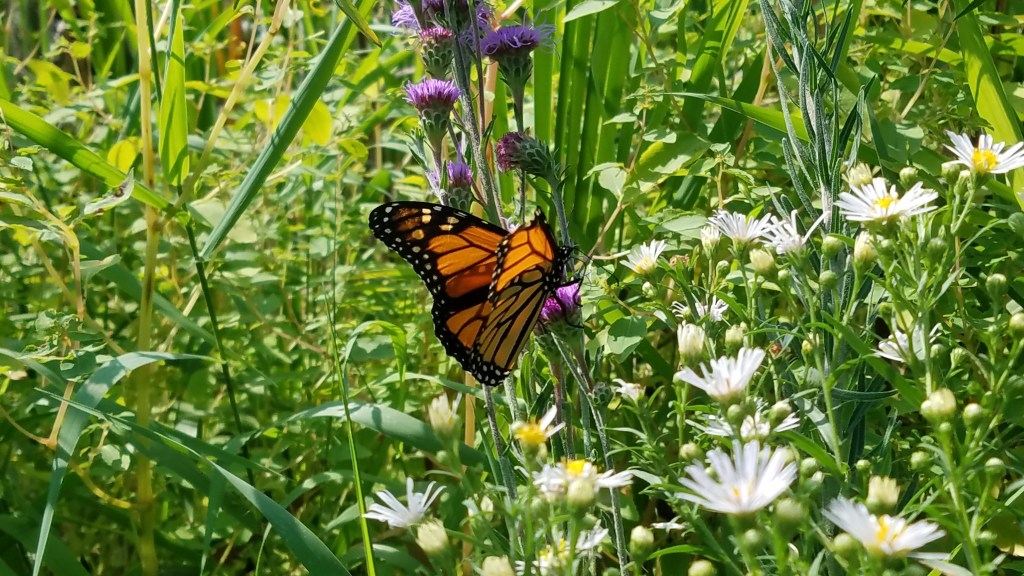
Native vegetation is adapted to local environmental conditions, and provide essential habitat and food sources for native wildlife.
Improved water quality
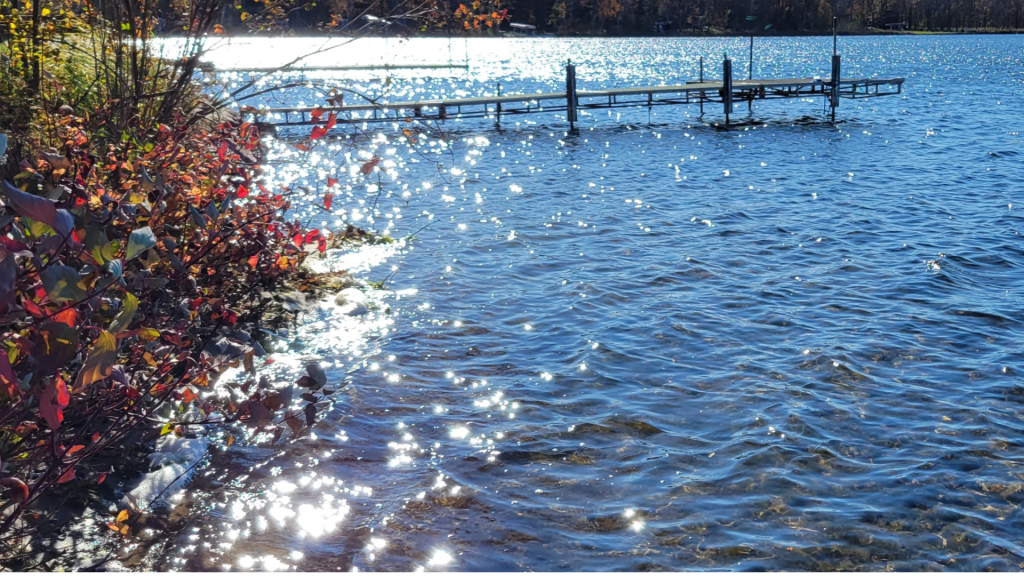
The root systems of native plants help filter pollutants and excess nutrients from runoff, improving water quality.
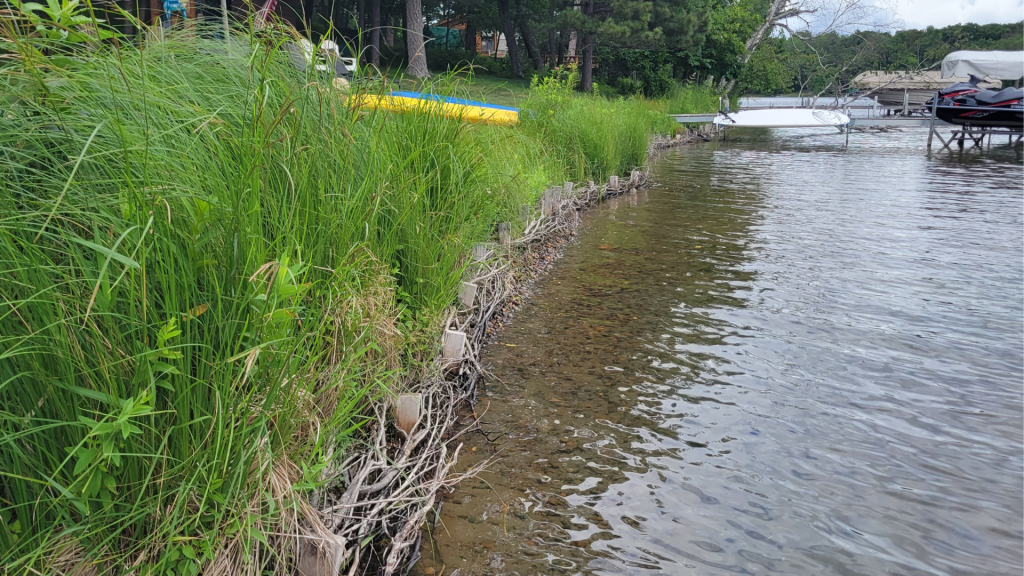
Erosion control
The extensive root systems of native plants help stabilize soil and prevent erosion.
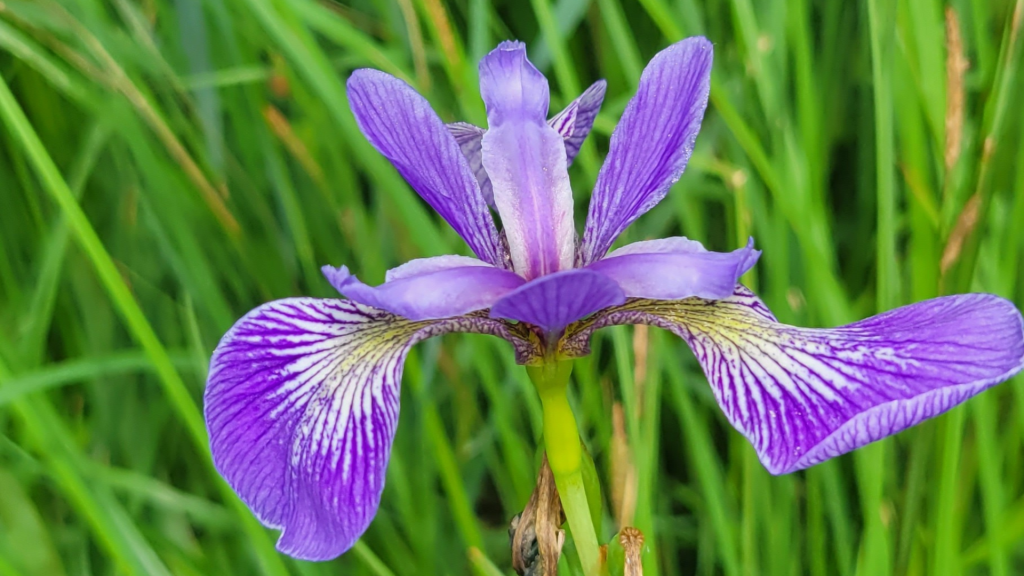
Resilience to climate change
Native plants are more resilient to the impacts of climate change, including increased temperatures, droughts, flooding, and other extreme weather events.

Aesthetic and recreational value
Well designed natural landscapes consider the recreational use of land and provide visually appealing natural landscapes.

Cost effectiveness & sustainability
As native plants are well adapted to the local conditions, they require less maintenance and its associated costs.
Featured project at lake Ossawinnamakee
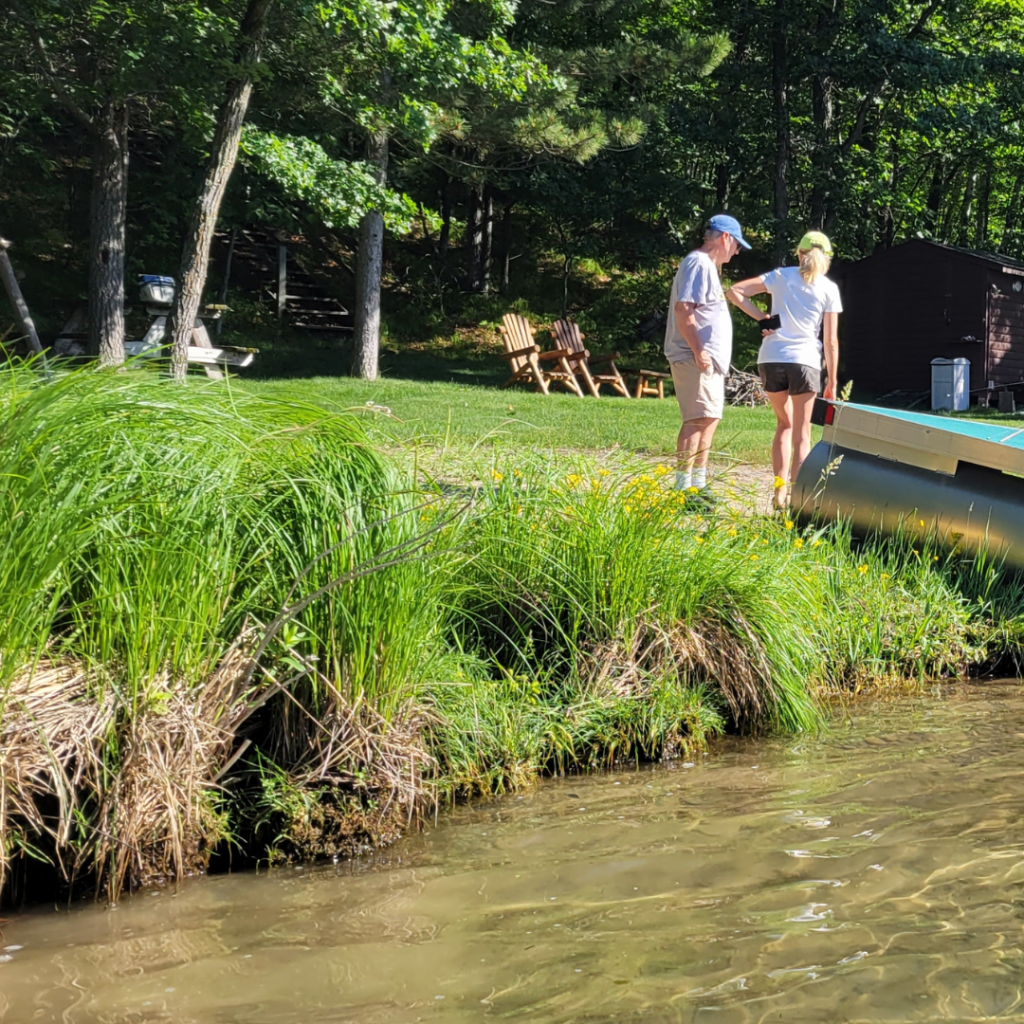
Site visit
We talked to the landowners about their project expectations, evaluated the state of the shoreline and gathered information to design a plan accordingly. This shoreline had some signs of erosion, with undercut in certain areas.
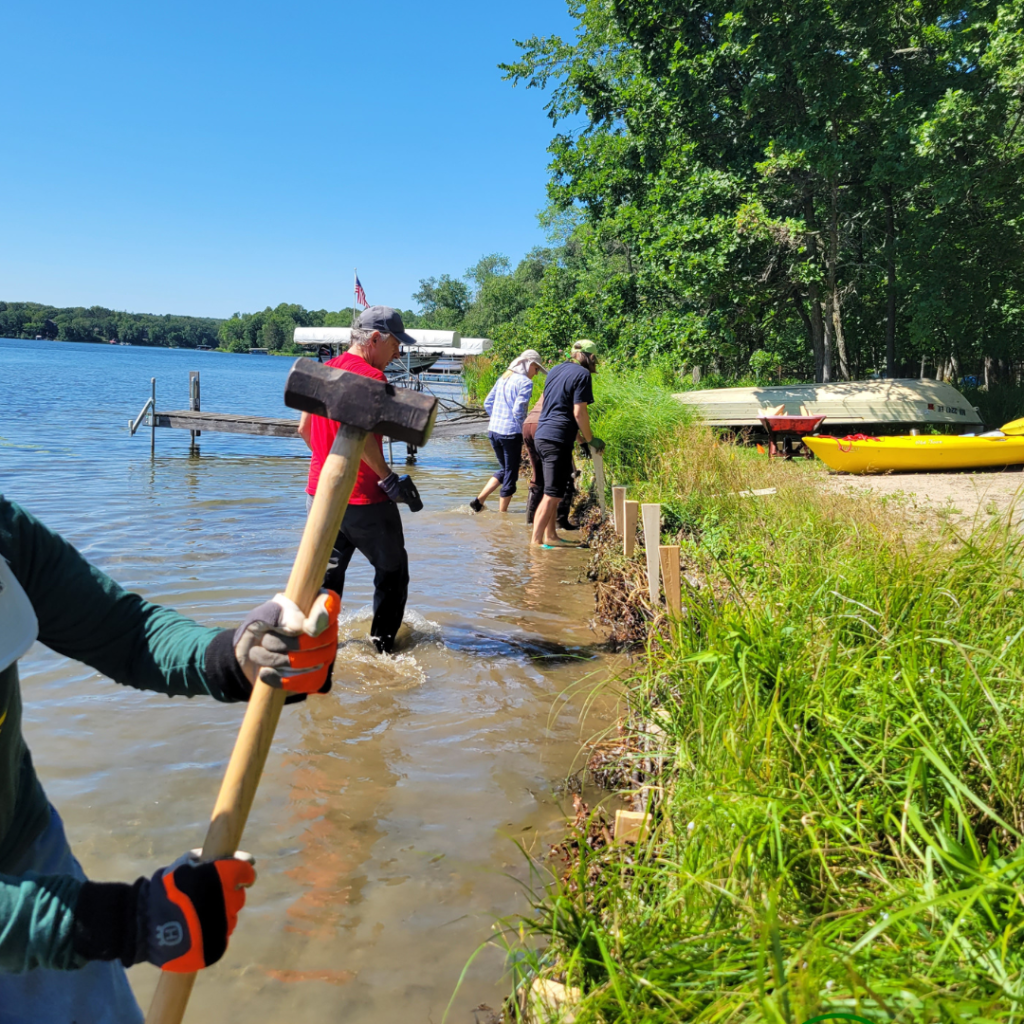
Installation workshop
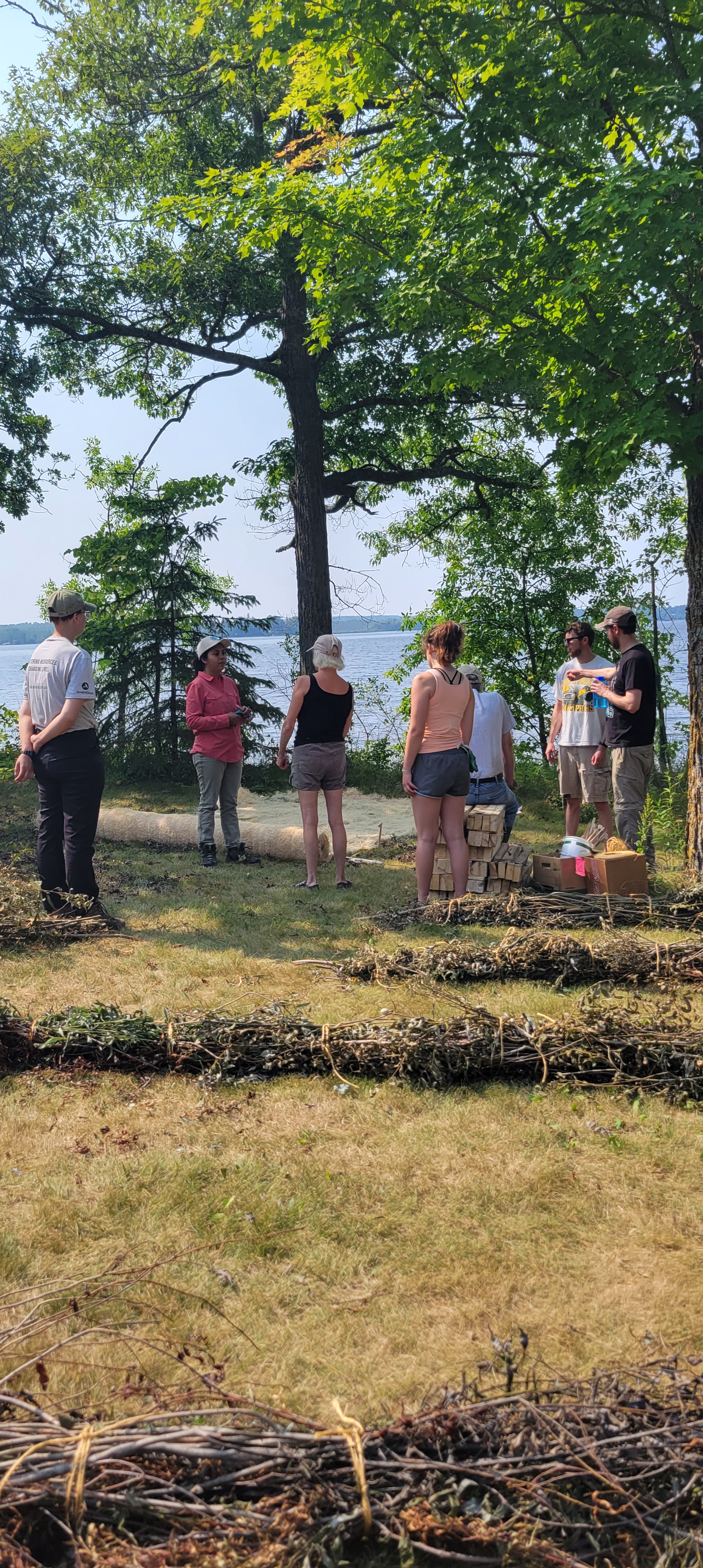
Family and friends got together to learn and help install willow wattle and plant native vegetation.
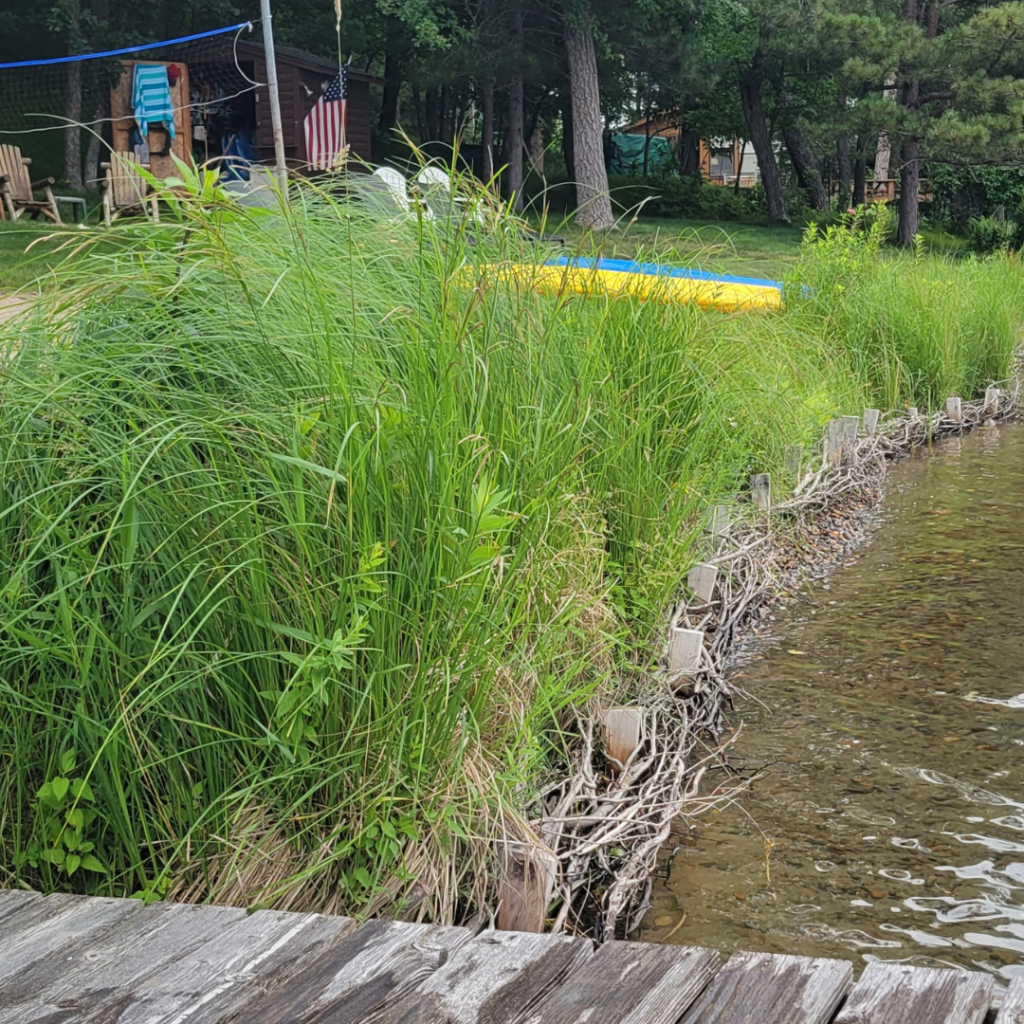
Follow up 1 year later
The willow wattle is protecting the lake bank and collecting debris from the lake, restoring the erosion on the lake bank.

Follow up 1 year later
Established native vegetation is offering habitat for pollinators.
Every project has unique characteristics and needs, our designs consider every aspect to provide the perfect balance between ecological benefits and land use.
Do you want lo learn more about what we do?